Monday, June 28, 2010

Music Review - Dream Theater - Train of Thought


This is probably my second favorite Dream Theater album, behind Scenes from a Memory. This album really shows the bands insanely technical side with a flair of heaviness not really seen in their previous albums.

Train of Thought is basically Dream Theaters heavy metal album; tons of double bass and ridiculously technical drums, downtuned guitars, downtuned drums, lighting fast guitar and keyboard solos and songs stretching past 13 minutes in places. This is a fast, heavy and hard-hitting album, but it's not without its terrific catchy melodies, though they do tend to air on the darker side.

James LaBrie, who is one of my all time favorite vocalists sounds perfect here, with some awesome high notes and even some rap influenced vocal lines, which actually sound pretty darn cool. The lyrics, honestly, aren't the best I've ever seen and really lean more towards whining and complaining about life, but heck, they fit the music and are sung really well, so I can suffer through them.

What's so cool about this album is just to hear the band absolutely cut loose on every instrument and just blast at full speed for the whole album. While they've always been technical, this is pure showmanship in every way. From almost death metal sounding instrumental parts in various songs to the quirky solos in the track Endless Sacrifice to the angry buildup and climax of Honor Thy Father to the epic closer In the Name of God, every song is packed to the brim with just insane instrumentation. The instrumental Stream of Consciousness is the high point for all of it, and I'd definitely say that it's the most technical and complex track here.

So in conclusion, Train of Thought is definitely Dream Theaters heaviest, most technical and catchiest album. Heavy guitars, angry vocals and brilliant playing by every band member solidifies Train of Thought as one of my favorite metal albums.

Wednesday, June 23, 2010

Cigar Review - Rocky Patel Java


Rocky Patel Java is another of my go-to cigars. I really have yet to be disappointed by anything Rocky sets his hand to, but he really struck gold with this cigar. This is, to quote the gentleman who sold it to me, "like smoking dessert," and this is probably the best description I've heard for the Java.

Firstly, this is a sleek looking cigar; it's square pressed for an elegant box shape with simple and tasteful labels on both ends. Secondly, this is one of the best tasting cigars I've yet smoked, ever. Before even cutting it and lighting it it gives off a very good coffee/cocoa flavor, and I mean REAL flavor. I would honestly buy these and just chew on them for the flavor, delicious.

Once lit, it burned perfectly and evenly, with strong coffee and cocoa flavors dominating. As I smoked the Java down the flavors became darker and spicier until the final fifth or so the cigar, at which point it became rather bitter and I had to stop smoking it. The smell is terrific, and is one of the only cigars I've smoked that doesn't seem to repel non-cigar smokers away.

The Rocky Patel Java is a fantastic after dinner dessert cigar, with outstanding flavor, burn and smell. I highly recommend the Maduro version, as this has some deeper and more rich textures in the flavor. For any cigar smoker, the Java is a must-smoke.

Rocky Patel Drew Estate Java Maduro
rated 9/10
Brazilian Maduro wrapper with Nicaraguan filler
Lighting method used: 3 torch lighter followed by single torch

Monday, June 21, 2010

Book Review - All the Pretty Horses


Cormac McCarthy has fast become one of my favorite authors, and I'm in the process of acquiring/reading as many of his works as I can. Having heard that he had written a Western styled trilogy of books, I went to the library and rented all three. I'll be reviewing each independently and when I finish the trilogy I'll post a brief recap of the whole story.

Cormac McCarthys style is fashioned after the styles of William Faulkner and Ernest Hemingway (among others), with long sentences, plain descriptions, simple dialogue and a very un-stylized style. This can be somewhat of a turn off, as individual sentences can sometimes run to almost half a page. It's an interesting technique that does take a little getting used too. The lack of punctuation besides the occasional comma, periods and apostrophes is also interesting and really speeds up the reading. I never noticed before how much punctuation can slow you down when reading before reading McCarthy.

I don't like giving away stories and plots in my reviews, so there's no spoilers here. I will touch on a few key points though: firstly, McCarthy is master of dialogue and showing what really makes people tick inside through simple observation. He really and truly is a master at his craft. Simplicity in the modern world is an almost bygone quality, but McCarthy has it down like few others ever have. While not as heartbreaking as his most recent work The Road, lots of emotion can be felt through the sparse and sometimes harsh dialogue. There's also a good amount of philosophizing to be found here, in long and drawn out sentences. Some of it really struck a chord inside me, some of it seemed to be more or less rambling, but all of it at least sounds good. I don't mind rambling about nothing, so long as it is conveyed in an interesting way.

All the Pretty Horses isn't for the faint of heart, despite it's deceptive title. There is a lot of harsh violence depicted in this mid 1900s western novel, and the dialogue between the various thieves, killers, criminals and innocents can be as terse and harsh as the descriptions of the surrounding Mexico/Texas landscape. While nothing to grotesque, those put off by stark looks at violence should be warned.

In conclusion, All the Pretty Horses is another evocative novel from Cormac McCarthy. Bleak, brutal and sparse in every way, I loved this book and am eager to begin the next in the trilogy.

Friday, June 18, 2010

Movie Review - The Book of Eli


This was a potentially interesting take on the post-apocalyptic genre of film, and I was genuinely interested in seeing it. It's concept was something fairly untapped in recent film, and I liked the idea of books being so valuable in the post-apocalyptic world. Unfortunately for me, this movie was somehting of a letdown.

Here's what I liked: The main character, Eli, had a good moral compass. I like that a lot. He prays to God, has good values and refuses to compromise sexually. There's some really cool action sequences, the cinematagrophy is excellent and the acting is good, which is no surprise since its Denzel Washington and Gary Oldman. There's some thought provoking material here, and the script is fairly solid.

Here's what I didn't like: The execution is shaky. I wasn't aware Eli was supposed to be blind until some time after I saw the movie, and I don't really think he was. There were scenes that left me puzzled, such as when he gets shot from behind, but nothing happens and he continues walking on. I didn't know if the shot had missed, been deflected, or what. Eli shooting a cat with his bow and arrow, if he was blind, seems really implausible. Did he acquire these skills previously, are they divine or what? That was never answered. There's a sense of "seen it before" through the whole film; the villains are all suitably evil-looking, the main bad guy (Oldman) is a good villain but just seems cliche. Eli is a typical loner, wandering down his road on his God-given quest. Not a bad story, but nothing really innovative. The violence tries far too hard to be shocking, hard hitting and almost...philosophical and ends up being in bad taste more than anything.

There is one scene though, towards the second third of the film if I remember rightly, in which Eli and his companion wander into the home of some very friendly people that turns out to be an almost fatal decision that was brilliantly filmed. Without giving it away, I can say this was a perfect, eerie, unsettling scene that really made me sit up and pay attention. Kudos to the director and crew for filming that scene so well.

It certainly is a good film to look at; the colours are interesting, the camera-work is terrific. I wish that most of the really neat action scenes hadn't been shown in every trailer, as I felt that that they showed all the best parts in the trailers. Timing was also bad here, as The Book of Eli was released within a very short time as The Road, and since both movies have nearly identical plots it really took away from The Book of Eli.

All this isn't to say its a bad film; it just could have been better. Too much time was spent trying to philosophize in a Matrix-esque way, and this took away from the overall movie, I think. Had 20 or 30 minutes cut out of it and some of the weaker segments of philosophical/ethical discussions that take place been cut out, I thank it would have fared a lot better. Overall, this is a plain okay film that isn't terrible, but isn't anything amazing.

Tuesday, June 15, 2010

Music Review - Insomnium - Above the Weeping World


Above the Weeping World is Insomnium's 3rd album, and while not as strong as their newest album Across the Dark, this record is a strong combination of melodic death metal and soft acoustic interludes, some of which border on ambient. While not my personal favorite of theirs, ATTW is definitely a solid album.

The melodic death metal of the album hasn't changed a whole lot since the first release by the band, but this isn't a bad thing at all. There's some real killer guitar work here, especially on the first three songs. While there aren't any blazing solos or wild technical riffing going on, there is still genuine emotion in the melodies played here, which is Insomniums greatest strength. As on every other of their albums, sorrow, nostalgia, anger and even a few glimmers of happiness can be found here, all of which are conveyed in real meaningful ways and avoid sound cheesy or over the top. The vocals contribute a lot to this, with deep powerful roars and growls that really add a lot of feeling to the music. Another big factor is the brilliant use of acoustic guitars, which more than anything here add feeling to the music. Whether used in intros or interludes, the soft acoustic moments are gentle and quite lovely, never out of place and something I really applaud the band for using so well. The pace is slow-to-mid with occasional fast breaks, however these are few and far between and the majority of the album is content to amble along at a mostly slow speed.

The lyrics are another strong point; Insomnium write some of my favorite lyrics of any band. Resembling poetry more than most bands lyrics (and in the 3rd song using an actual poem from Francis William Bourdillion) they are dreary and sorrowful, but like the actual music avoid being cheesy, which is something a lot of artists fail to do.

The highlights of this album for me are the first three songs, the third of which, Drawn to Black, is my favorite off the album and my favorite Insomnium song. The main riff is brilliant, the pace is perfect and the entire song simply works beautifully. There are some slower and duller moments though, particularly towards the end of the album. These are offset by some terrific acoustics though, and don't really take too much away from the album.

Overall, this is a strong effort by a fantastic band. Outstanding use of acoustics combined with mostly engaging melodic death metal make for a good combination, and Insomnium pull it off very well here.

Sunday, June 13, 2010

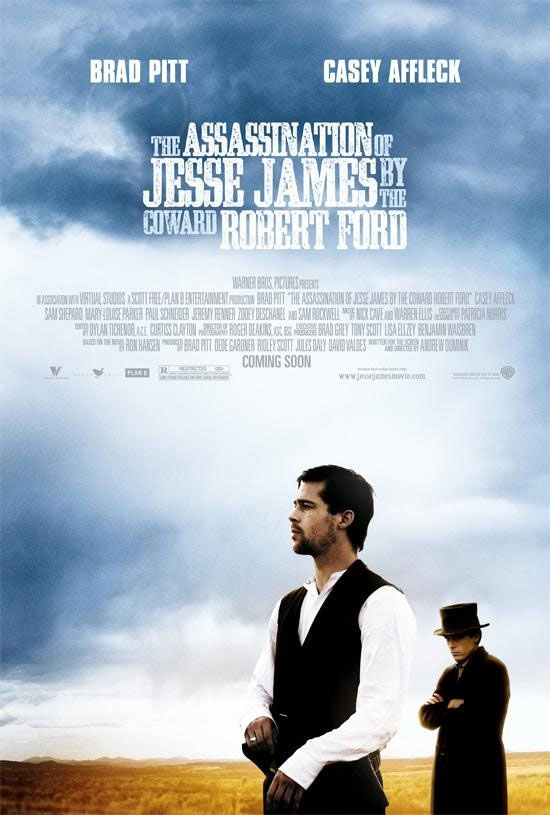
Movie Review - The Assassination of Jesse James by the Coward Robert Ford


When you think of a Western, the first thing to usually pop into your head is a shootout. Shootouts and Westerns go together like Star Wars films and lightsaber duels; they're more or less the focus of both. Also typical of Westerns are bar fights, carriage robberies, Mexican standoffs, horse chases and lassoing. The Assassination of Jesse James by the Coward Robert Ford has none of those. This isn't a Sergio Leone gunslinging epic, in fact guns are only drawn a few brief times in the whole film. This is a film that focuses on acting, cinematagrophy and dialogue to tell an amazing story that just happens to be set in the Old American West.

First off, the acting here is some of the finest I have ever seen. Brad Pitt, as Jesse James gives a performance that is up there with some of the all time greats, going form insane to gentle and back again with an ease that I've rarely seen. This is definitely one of the highlights of his entire career in my mind. Casey Affleck, playing Robert Ford is just as good though, giving something of an eerie and uneasy feel to his character that adds to the entire feel of the movie. While these two are the powerhouses, every single actor/actress here is in top form and leaves nothing to be desired. It's rare that such a large cast does such a brilliant job all around.

Secondly is the cinematagrophy, which is as brilliant as the acting. I've only seen a few movies shot this well and with minimal digital assistance (if any). The colors and lighting are honestly perfect, and coupled with the actual camera-work perfectly set the tone for the whole movie. Real feelings of nostalgia, dreariness and unease are made real simply through the cinematagrophy. 10/10 for every shot being nothing less than beautiful.

Lastly is the dialogue. Dialogue is a big point for me in movies, and this film certainly delivers. While hard to understand some of the soft, southern-accented mutterings, the dialogue here is top notch in every way. Banter between Jesse and Robert Ford turns deadly and back to normal with almost frightening ease. Like the cinematagrophy, every line is carefully crafted to fit perfectly with the scene at hand.

Another element of the movie that is probably my favorite is the score, done by Nick Cave and Warren Ellis. The music here is beautiful, perfectly and brilliantly capturing the sad, nostalgic feel of the movie and giving a real dreamy quality to the films narration. Comprised of mostly piano and violins, these sad and haunting tunes are another of the pieces that really make this movie so good. Nick Cave and Warren Ellis are fantastic artists, and in my opinion this is their best soundtrack they've yet made. Sad, ominous, eerie, the duo does it all here.

The Assassination of Jesse James by the Coward Robert Ford is definitely not for those seeking a standard shoot-em-up western.When the violence does emerge though, it is in very brief and intense blasts, sometimes lasting no longer than a gunshot. This movie is long, and very slow; I'd actually say one of the longest and slowest I've seen.  It is also one of the most dreary movies I've seen; there's no cheer or laughter or comic relief to be found here. It can drag on at times, particularly towards the middle of the movie, so viewers beware. However, a combination of some of the best acting and cinematagrophy make this a must see, in my opinion. Devoid of any cliches of the Western genre, this film is one of my favorites and a movie I highly recommend.

Sunday, May 30, 2010

An Early Memorial Day Thought

Since tomorrow is Memorial Day and I'll likely be too busy to post anything here, I'm going to do it a day early. 

I read the book Flags of Our Father some time ago, and that book really changed how I thought about World War 2. The utter hell that millions and millions of men and women willingly went through to preserve the freedoms enjoyed by America and many other great nations is something I can't really grasp. I then went to Europe for 3 weeks and basically did a WWII tour with my uncle, an historian. We walked along Point du Hoc, where hundreds of artillery craters still stand and barbed wire still lines the tops of the cliffs. We walked along Omaha beach where 65 years earlier our soldiers were being riddled with Nazi bullets. I walked in foxholes dug by Easy Company in the forests around Bastogne during the Battle of the Bulge and saw buildings still covered in bullet holes. We visited countless cemeteries and museums and historical battle sites and monuments. 

It was really an eye-opening experience for me and a trip that I'd encourage every American to make at least once. 3.5 million people since 1776 have died on our Armed Forces in order to preserve the freedoms that we hold so dear, take for granted and sometimes don't even realize how much of a privilege they are to have.

I'm sure everyone has heard this before, but freedom truly isn't free. I could post countless quotes by many people way smarter than me on the subject, but I'll keep it simple. Freedom is not free. Period. There will always be those who want and hate freedom and want nothing more than to take it away from others, and it is in defense of that freedom that 3.5 million people have died.

 There are just wars. There are necessary wars. There are times when it is necessary to kill. That's just how it is. That's how it will always be. Regardless of the opinions of countless anti-war groups, people, etc, that's how it is. To quote a member of Easy Company, Herb Suerth Jr.:

"It does no good to wish that other countries would simply lay down their arms and be nice to us. It ain't going to happen. Unless you stand up and be counted for what you believe in, you will lose all the freedoms that are important to you. Freedom isn't, and never will be, free."

3.5 million people have died to ensure that everyone who came after them would not have to. Freedom is not free, and to all those serving in the Armed Forces, and to all the veterans who given so much to keep us free, thank you. Thank you. 


Tuesday, May 25, 2010

A Rorschach Test

In case you don't know, I'm an avid fan of Watchmen, both the novel and film. I'm particularly drawn to one of the central characters, Rorschach, named for the ink-blot test commonly used in psychotherapy. His mask is one of ever changing Rorschach patterns, but the black and white never mixes and are always symmetrical. This is a reflection of his thought process, that while his views do change, they are always absolute in their conviction. This is his greatest strength, more so than his immense physical strength and his extremely agile mind.

He believes in absolute good and absolute evil, often to a fanatical degree. That which is good he will protect, by punishing that which is evil in any way possible, often by killing it outright. While his views do lean towards the extreme to the point of impracticality, its his unwavering devotion to his ideals of good that I admire. His refusal to compromise in any way, even at the expense of world peace and in the end his own life is a spirit that is sorely lacking in todays world of moral relativism. Instead of taking the easy way out, instead of compromising his ideals and beliefs, Rorschach trudges on sullenly, doing his part to rid his world of evil in the form of killing all those who threaten the good and innocent.

While I don't necessarily advocate vigilante justice (though it is a topic I would be willing to argue in favor of) the thought process being it, that of absolute uncompromising devotion to good, is something I do advocate and try to practice in my own life, though with less than stellar results in many cases.

The challenge in all this is determining what really is or isn't "good." There's only one standard that I can really call absolute, and that is the Bible. Attempting to hold fast to any other thing is, while maybe with admirable devotion, in the end doesn't amount to much. There's simply no other book of absolute good in this world. There are some fine teachings from ages and ages of philosophizing and thinking, but when you boil it down, the Bible, being the written word of God, is really all you can call absolute. I make no claim to be perfect, but I try my best to simply not compromise on things that are in that Book.

It's not something one can do on one's own though, and despite Rorschachs godless world, it is only though God that one has any chance of adhering to the Bible at all. Through God.

Anything else, any other attempt through any other means will be, to quote Rorschach, "Nothing Short of compromise."

Wednesday, May 19, 2010

Book Review - Rocket Men


Going to the moon was pretty much the biggest deal in human history. There's no way around that. It was a big freaking deal, and it really still is. I'm sure most everyone has seen documentaries on the History Channel or National Geographic on the moon landings and/or seen the movies Apollo 13 or The Right Stuff. If you're an American, then it's pretty much your default setting to know at least a little about the moon landing. There are also quite a few books on the subject, and most of them are pretty darn good. There are a LOT though, so for one to really stand out it'd have to be pretty darn spectacular. A blurb on the cover of this book, Rocket Men, says that it's "brilliant" and "spectacular". Well, I have to disagree on those two, but it's still a good read nonetheless.

This is basically a more behind the scenes look at the Apollo program, with hundreds of memoir-like quotes from engineers, pilots, scientists and politicians on the moon landing. The more personal and historical side of the book is actually very interesting as it really shows the human side of the people involved and just how much of a strain this task really was. The astronauts become less mythical and much more human, and their differing views on the project and all around world-views are something I hadn't heard a lot of before this book. Like I said, when the story becomes focused on the people and the history of the Apollo program, this book really soars. The downside is that a lot of the book is engineer/scientist talk, with pages of technical details and things that just plain old didn't interest me very much. I'm not downplaying the importance, obviously, but to someone like me who isn't an engineer it just wasn't conveyed in an interesting way.

There's some really good stuff here though; the politics and infighting of things like who would be the first man to walk on the moon, what he would say and what would be on the plaque left on the moon are all things I didn't know before. The history of the Cuban Missile Crisis and the Cold War and how it related to the Space Race were fantastically conveyed; as I said before the historical narrative is where this book really shines.

Overall, this isn't a book I'd really call epic and spectacular. It's a well-written and very informative look at the more historical and personal side of the Apollo Program, which isn't usually the norm for books on the subject. Rocket Men, while not really reinventing the wheel for Space Race books, gives a good in depth look at the Apollo Program from a much more personal and human perspective than most books on the subject. It's well-written and something I recommend for any fan of space or American history.

Tuesday, May 18, 2010

Music Review - Dream Theater - Systematic Chaos


I have to say, I'm not entirely sure how I feel about this album. I love Dream Theater and no one can deny that the band members are incredible players, but this is an odd album for me. There's times when I listen to it and love it, and then times when I listen to it and really don't think it's that great.

There is some top-notch stuff here, though. The opening two songs are fantastic, with the former (In The Presence of Enemies Pt. 1) being a pretty solid Dream Theater song, with lots of soloing and terrific playing all around. It's sort of the kind of song I expect them to do on a regular basis; it's not amazing but it certainly isn't too shabby at all. Forsaken, the second track, is a terrific shorter piece, focusing more on a slightly darker (and dare I say "gothic") atmosphere and a good catchy chorus. Forsaken was the single and if I'm not mistaken the song that got radio play. The rest of the songs sort of waver between okay, good and not that great, except for The Ministry of Lost Souls. This is the kind of song Dream Theater need to be writing; long, technical, multiple long solos and non-conventional structuring. It's one of my favorite Dream Theater songs and definitely the strongest on the whole album. There's a few interesting moments here and there, such as the Opeth-like psychedelic rocker Repentance, which is a good relaxing song and something of a throwback to the psychedelic/trippy feel of 70s progressive rock. Other than that though, the songs are just not that great. The solos are all cool, the band is in top form and James LaBrie sounds terrific, but the songs just don't pack any real punch.

I don't hate this album and I listen to it fairly often, but my selection of songs on it is pretty thin. When the band tries to sound heavy and metallic, like on Constant Motion and The Dark Eternal Night, it just plain old doesn't work. However, the softer songs like Repentance and the more typical Dream Theater songs like the opener and The Ministry of Lost Souls really let the band shine. This isn't a bad album, it just lacks some of the fire that other Dream Theater albums have. Thankfully the slight slump in songwriting isn't an ongoing problem, as the latest album has shown.

In conclusion, Systematic Chaos has a couple of good Dream Theater songs and a couple of not so good songs. Don't expect to be blown away by this album but don't expect a total failure. I'd recommend buying a couple song off of iTunes or whatever service you use, and leave the rest alone.

Sunday, May 16, 2010

Father and Son

I was recently talking to a fellow blogging (and real life) friend about various books we've read, and one of the books I had out was The Road. If you've read some of my posts you'll know I'm a big fan of both the book and movie, and of course, the author. I was making a point about one particular line of narration, my favorite in the novel and my favorite from recent times. It describes how the Man and Boy sustain each other in their hellish world:

"Each was the others world entire."

What a powerful idea...the love between father and son is so strong that that's simply all there is to their existence. That's quite the love, if you think about it. Love so powerful between two people that it literally is the only thing keeping them alive. I wouldn't imagine there's too many people who would use something like that to describe how they feel about most anything or anyone.

I don't really have a profound statement to make on this subject, but I suppose my conclusion is that that's the kind of love that really should be manifesting itself in ones life and that one should be striving for. Again, I have no deep thesis on this, this is just something I was rolling around in my head. Give it some thought.

"Each was the others world entire."

Saturday, May 15, 2010

Movie Review - Robin Hood


I will be blunt with this. Robin Hood was not as good as I was hoping for it to be. This was a plain old not very good movie, which was really disappointing. Ridley Scott and Russell Crowe have done some fantastic movies together and on their own, but this is definitely not one of them.

Throughout this movie, there was just an overwhelming sense of...almost laziness. The characters of Robin Hood, Marion, Will Scarlet, Allan a Dale, Little John, the Sheriff of Nottingham are never really expanded on and developed; most of them with the exceptions of Robin and Marion remain mostly background characters. The scenes feel rushed, as if all that was really wanted was to do as many cool battle/action scenes as possible, and even those aren't all that impressive. While Rusell Crowe is a brilliant actor, the portrayal of Robin Hood here is actually boring in spots, as is Cate Blanchett as Marion of Locksley. This isn't entirely their fault though as the script is very, very weak. The dialogue is totally unremarkable and simply doesn't do anything. It is some words spoken by actors. That's it. Even the scenes where "epic" speeches are given fall flat; there's just no fire in the script. Like I said before, the script just feels rushed, like it's just filler in between "epic" fight and battle scenes that aren't that cool, which is really disappointing considering some of the movies Scott has made that incorporate those. The story is just plain simplistic, weak and not even well thought out. The movie as a whole suffers from flat out poor script writing.

There's not a whole lot more to say on this film...it wasn't a terrible film, but it certainly wasn't amazing or exceptional or even memorable. There's just nothing here really but negatives: next to no character development, flimsy dialogue and half-hearted battles scenes. Ridley Scott has done some terrific period epics, like Gladiator and Kingdom of Heaven that really are terrific movies, but Robin Hood is nowhere near as good as those. I'm hard pressed to find any real big redeeming factors about this movie, but it's just so mediocre and halfhearted I can't really find any. I don't really recommend this movie, as there's really nothing to see here.

Friday, May 14, 2010

Essential Listening- Dream Theater - Metropolis Pt. 2: Scenes From a Memory


I have to admit, I'm something of a Dream Theater fanboy. With the exception of some of their earliest albums, there's nothing of theirs I don't like. I honestly believe that they're one of the most talented groups of musicians to ever form, and this album to me is the high point of their entire career and one of the high points of music as a whole.

There is a LOT going on in this album, so I'll start with some general specifics. This is a LONG album. Three of the 12 tracks are over 11 minutes long (Beyond This Life, Home and Finally Free), and each of these is basically the band playing as furiously as possible for as long as possible. These do take some getting used to just because of how long and drawn out they can be, but they're balanced by several shorter and more accessible songs. These include Fatal Tragedy and Strange Deja Vu, which while having incredible solos throughout are also catchy and more conventionally structured songs. There's also shorter interludes (Regression, Overture 1928, Through My Words, and One last Time ranging from a minute to four minutes, and these are actually very enjoyable.

While not really what I would call a "metal" album, it does have its heavier and more metallic moments, involving very fast double-bass drumming courtesy of Mike Portnoy and some good heavy (but still very catchy) guitar riffs delivered by John Petrucci. The tempo is generally mid-to-slow paced and airs more on the progressive rock side, as opposed to metal. The writing here is superb in every area, with elements of classical, jazz, blues, psychedelic rock (Home), ragtime (The Dance of Eternity) and gospel (Through Her Eyes and The Spirit Carries On) all being used and used brilliantly. Since this is Dream Theater, no real explanation is needed on the proficiency of the actual playing; every member here is a virtuoso, period. James LaBrie is brilliant here as well, hitting some absolutely terrific high notes and putting a tremendous amount of feeling and soul into his singing.

The two best parts about this album for me would be the instrumental The Dance of Eternity and the ballad The Spirit Carries On. The Dance of Eternity is nothing short of a mind-blowing display of technicality from the band, with something like 130 time changes in 6 minute song, a ragtime piano solo, an insane bass solo and more guitar and drum solos than you can count. Incredible piece. The Spirit Carries On is quite the opposite; it's a very relaxed ballad but I'm willing to say it's the single best Dream Theater song ever written. Flawless vocals and a guitar solo that would make Pink Floyd blush as well as a full gospel choir, this is the epitome of brilliant.

While Dream Theater have had a fantastic career with some truly brilliant albums, this is the pinnacle of it all. Technically brilliant but still having real soul and emotion in every song, Metropolis Pt. 2: Scenes From a Memory is definitely essential listening for anyone who likes good music.

Monday, May 10, 2010

Music Review - Earth - Hex-Or Printing in the Infernal Method


The Old West was a brutal place to live. In fact, I'd rank the Old West as the worst time and place you could have been alive, after ancient Egypt and the Dark Ages. Life was dangerous, harsh, monotonous and dreary, which is almost exactly how I'd describe this album by drone pioneers Earth. This is an interesting album, and of a style that isn't too often seen. Instead of the enormous fluctuating walls of bass and low end that usually define drone, this is made up of entirely clean instrumental playing that includes banjo, steel lap guitar and even some tribal drumming in a style that really brings the epic Western music of Ennio Morricone to mind.

This album is basically 45 minutes of really, really, really slow and really, really, really heavy country/western music, with hints of the bands drone history as well as some psychedelic moments thrown in. The guitars twang sounds like something out of a Johnny Cash era country album and definitely give the album a real authentic Western flavor. There's no real amazing solos or crazy riffing going on here; this is pure mood/atmospheric music. Some songs, such as An Inquest Concerning Teeth and Tethered to the Polestar convey feelings of hope and more uplifting themes, while tracks like the ominous Raiford (The Felon Wind) really bring to mind images of the Badlands in all their desolate and harsh glory and is the only time I've ever heard a banjo sound heavier than a metal guitar. Raiford (The Felon Wind) is the probably my favorite song off the album simply because it's one of the most crushing songs I've ever heard yet still manages to retain its country/western style. Being a drone album (and I use "drone" loosely here) this is very slow and repetitive music; it really has more in common with ambient than drone, I think. There's moments here and there where the music really isn't that interesting, and part of me thinks that this goes along with the dreariness of pioneer life, and the other part of me says they just ran out of ideas for the song at hand. But for the most part the music is engaging and genuinely atmospheric, calling up images of vast deserts and canyons, vultures circling and many other harsh realities of life in the Old West.

If you're looking for normal, happy and upbeat western music, this is not for you. However, if your looking for authentic, truly mood setting western styled drone/ambient, or just interesting country/western music in general, this album is for you. While not perfect, as it can drag on as ideas are simply repeated over and over, this is an all round interesting album by a fantastic band.

Friday, May 7, 2010

Movie Review - Watchmen


Zack Snyder, director of 300 and Dawn of The Dead, decided to tackle one of the most complex and in depth  pieces of modern fiction ever penned, the graphic novel Watchmen. Translating this 12 volume work to the big screen was obviously something of a challenge, as the extremely complex ideas, psychologies, mythologies and many plots and subplots were all crucial to the story itself. In bringing Watchmen to film, Zack Snyder made not only a terrific adaption of the novel but also one of my favorite films of all time. 

This is not a normal superhero movie, and it is definitely not an action film. In fact, this is basically a long, slow, dialogue filled drama that happens to have a few action scenes in it. For those looking for cheap thrills and predictable heroes, look elsewhere . The "heroes", which I use loosely (since with the exception of one, none have any real powers) are from all different walks of life; one of the main ideas behind the novel was to create several radically different views of the world and let the reader decide which was best, and radical they are. From the brutal black and white moral absolutism of Rorshach (played by Jackie Earl Hayley) to the equally brutal and extreme amorality of The Comedian (played by Jeffery Dean Morgan) to the morally relative Nite Owl and Silk Spectre (played by Patrick Wilson and Malin Ackerman)  to the uncaring god-like Dr. Manhattan, played by Billy Crudup), the differences in world views and vast and thought provoking. The philosophizing and ethical dialogue here is worthy of very close study and honestly have given me hours and hours of thought and even debate as to some of their meanings and implications, but since this is a film review and not a philosophy class I'll leave that for another post.  

Watchmen is very, very stylized, and those who saw 300 will have a pretty good idea how this movie will look. While the stylization is frequent, it's all done very tastefully and never comes off as overdone, though it certainly is over the top. But there lies one of Zack Snyders strengths: making overdoing and overdone look really, really, cool. This is a dark, bleak, violent and sometimes disturbing movie though, make no mistake about it. The novel itself was all of those things, but the film takes it to another level. There's scenes of violence here that are genuinely hard to watch, simply because of the brutality of it all, and I have to say there's a few places where I disapproved of the way a scene was portrayed. Theres two in particular that I dislike, and both were dramatically altered from the novel in ways that leave me to think that Snyder was going more for shock value than artistic integrity. So as a warning to those faint of heart, this is a hard movie to watch.

However, despite the dark and in places film-noir feel of the movie, it does have it's lighter moments, and you'll know exactly when those are when the music cues. The soundtrack here is one of the best I've heard; while composed mostly of pop hits such as Bob Dylans The Times are a Changin, Simon and Garfunkels The Sounds of Silence and Jimi Hendrix's version of All Along the Watchtower every song fits absolutely perfectly with the scene at hand. Kudos to the man behind the music selection and editing for doing a brilliant job.

Watchmen, with it's cynical look at humanity and bleak outlook on life, is a very, very interesting film. While not the most true adaption to the book as it could have been, Snyder and Co. have done a fantastic job brining to the big screen one of the most well-written stories ever. Watchmen, in my mind, has also set the bar for superhero movies. Shying away from predictable plots and plot devices, Watchmen is a thought provoking, deep and interesting take on humanity, that also happens to be one of the most entertaining and satisfying movies I've seen in a long, long time. 

Thursday, May 6, 2010

Book Review - No Country for Old Men


This is the second Cormac McCarthy book I've read, the first one being The Road. While written in the same sparse and minimalistic way, this is a very different tale than The Road, focusing on what happens to people thrown into out of control situations and forced to survive. The main difference between the two, in my mind is the dialogue. There is a lot more of it here, and it's less sparse than The Road was, much less so in fact. It's altogether more accessible, I think, simply because it's a more normal kind of story. The story itself is simple, but don't let that fool you, as it's through this simplicity that McCarthys strengths shine through the brightest.

The dialogue here is what really stands out to me. There's just so much of it; most of the novel is not carried by harrowing action scenes but by page after page of banter between killers, police and drug runners. Action is present though, and quite forcefully so. McCarthy is typically blunt in describing gruesome scenes of violence and murder here, but these are outnumbered by terse conversations leading up to and following the action scenes. I generally prefer dialogue to action, as long as it's well done, and I could honestly read the narration and dialogue between characters over and over and over again. Like I said before, the strength of this novel is in the dialogue.

No Country for Old Men is a few different things: it's a western, it's a mystery/detective story, it's a chase story and it's even a psychological thriller. Theres pages of thought provoking narration and revealing and even intimate dialogue and glimpses into the minds of the characters that McCarthy has created, and that's why I like this book so much. While it is a grim and gruesome read at times and not recommended for the faint of heart, No Country for Old Men is a sparse, hard edged and brilliant novel that I highly recommend.

Friday, April 30, 2010

Music Review - Dream Theater - Black Clouds and Silver Linings


Dream Theater ranks as one of my all-time favorite bands. There's nothing about them I don't like; from the insanely long and complicated songs and solos, the virtuosity of every member of the band, the self-referencing that appears on ever album, everything. I love this band, and I say that about very few band in the metal world.

Black Clouds and Silver Linings is the tenth full length album from Dream Theater, and in my opinion ranks as one of the best albums they've put out. I'm not a huge fan of their earlier music, from When Day and Dream Unite(their first album) until Metropolis Pt. 2: Scenes From A Memory, which I consider the bands high point and the high point of the entire progressive/rock/metal scene. I'd honestly put that album above Pink Floyds Dark Side of The Moon as the greatest album of the genre. While BCASL isn't quite on that level, I'd certainly rank it in the top 3 or 4 best albums Dream Theater have ever made.

After the previous album, Systematic Chaos, (which wasn't a bad album on its own, but for Dream Theater, it was pretty weak) I didn't have terribly high hopes for this album. Thankfully the band decided to basically do the opposite of Systematic Chaos, which is to say that they put a heck of a lot more effort into the songwriting than on SC. The writing here is the strongest its been in years; from the heavy and hard-hitting opening track to the gargantuan 20 minute Count of Tuscany to the arena rock ballad of Wither, the band is in absolute top form. This is Dream Theater firing on all cylinders, and the result is amazing. John Petrucci really gives a stellar performance (as always) on guitar, with some insane solos, heavy, complex riffs and some fantastic acoustic playing. Mike Portnoy is his usual brilliant self on drums, with a few really fast double-bass and even blast-beats thrown in, which is a first for Dream Theater if I'm not mistaken. Keyboards and bass, handled by Jordan Rudess and John Myung are both brilliant as well, though both are slightly more in the background than on previous albums, with less keyboard and bass shredding and placed in more supporting roles, though the keyboards do break out in a shred on occasion.

My favorite part of Dream Theater, however, is James Labrie, whom I consider to be one of the best male vocalists alive. I absolutely love his voice, and I think I'm in the minority for this, but I consider him to be a brilliant singer. While he's not hitting those ear-splitting high notes like on the first DT albums, he still puts on quite a show, with highs, lows, and everything in between belted out perfectly. While I happen to think his best vocal performance was on the Score 20th Anniversary tour for Dream Theater, this is definitely one of his finer moments.

Black Clouds and Silver Linings is Dream Theaters best album in years, and is hopefully a good indication of where the band is going musically in the years to come. Highlights from the album would be The Best of Times, a tribute to Mike Portnoys deceased father and one of the best Dream Theater songs ever written; Wither, a terrific power ballad; and A Nightmare to Remember, which is one of the bands heaviest songs in years. For anyone who likes virtuoso playing, brilliant song-writing and all around flawlessly executed music, this album is for you.

Tuesday, April 27, 2010

Book Review - The Road


Sparse. Bleak. Dark. Cold. Challenging. Post-apocalyptic.

All these are words that perfectly describe The Road, the latest novel by Cormac McCarthy. This was my first McCarthy book, and it was quite a different kind of reading experience for me. This is minimalist fiction, I suppose; the only dialogue, narration and even punctuation present is the bare minimum needed to get the ideas across. This minimalism helps convey a sense of traumatized silence in the wake of a horrible, unnamed catastrophe that's left the world a shattered and broken place. It's a very emotional style of writing that is perfectly suited to the subject of The Road: a Man and his Boy, simply trying to survive in a world gone to hell.

This is a very personal feeling book; there are incredibly intimate scenes between father and son that really resonated with me, just because of the plain and bluntly emotional style its conveyed with. Most of the dialogue between the Man and Boy consists of one word questions and answers, but its the simplicity that really carries the emotion and feeling behind these simple conversations.

This is the real strength of the book, in my opinion: the naked emotional connection between father and son. Theres no pretense or selfishness; to quote the novel, "Each is the other's world entire." That sums up the connection between the two, and its conveyed beautifully through simplicity. The theme of "carrying the fire" used in the very end of No Country for Old Men is also picked up here and made into a symbol of the goodness that the main characters carry within them. It's this Fire that is a continual reassurance to the Man and Boy that they aren't losing their love and compassion for each other (and to a lesser extent the rest of humanity) in spite of the horror they endure every day simply trying to survive.

This is a thoroughly challenging book to read, however, and there are some very disturbing and graphic scenes that depict the state of the world its bleak, post-apocalyptic  and savage state. Eerie scenes of confrontations of vicious and even cannibalistic travelers are the norm in The Road. McCarthy pulls no punches in describing some pretty horrific scenes, and again it's the sheer simplicity of the descriptions that really makes it so horrific.

In spite of all the dark and dreary and even disturbing imagery, The Road is at heart a simple story of two people trying to survive and how their love for each other is what keeps them alive and going day after day. Simple but heartfelt emotion between father and son is beautifully portrayed here, and makes The Road one of my favorite books from recent times.

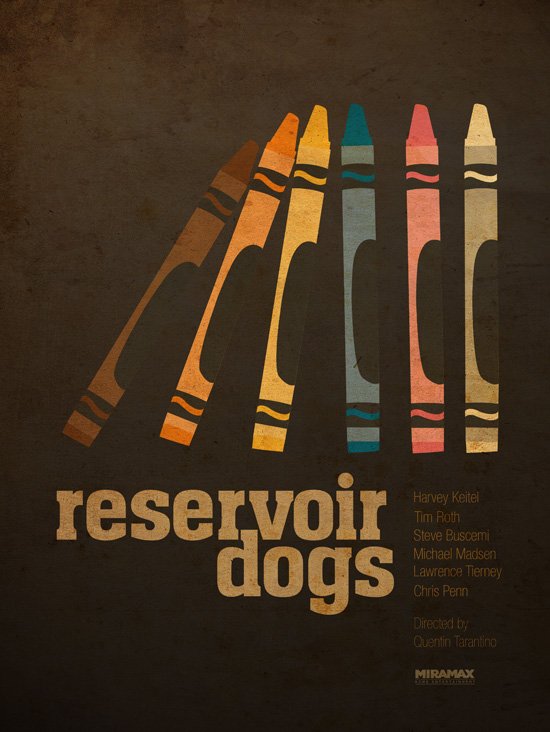
Top Ten # 1 - Reservoir Dogs


Quentin Tarantino is probably my favorite filmmaker alive. While he's not terribly original in terms of story or concept (since every movie he's ever made has been a tribute, homage or remake/interpretation of another work) his style of making films is completely and absolutely unoriginal. In my opinion, Tarantino flat out writes some of, if not the, best dialogue in film. No other director can hold my attention with film after film 2 hours or more in length and comprised of 70-90% dialogue like he can. Pulp Fiction, Kill Bill 2, Jackie Brown and Inglorious Basterds were all examples of that; movies almost completely driven by amazing dialogue. I'd say that's Tarantinos strongest talent.

Reservoir Dogs, the independent debut of film of Quentin Tarantino is the high point of all the above listed qualities. This is, in my opinion, the best American  movie ever made. This film is savage, ferocious, fiery and has an intensity level that very, very few movies I've ever seen can rival. This really is the product of a master filmmaker and has a stellar cast, with Harvey Keitel, Michael Madsen, Steve Buscemi, Tim Roth, Chris Penn and Lawrence Tierny all giving brilliant performances.

This movie has one of Tarantinos more unique concepts: this is a heist movie shown without the heist ever shown. All that's shown is how the men involved deal with an already bad situation that steadily goes from worse to even worse. It's an interesting idea that takes away from the countdown style of most heist movies and turns it into live ticking clock style that adds a real intensity to the film.

Intensity here is the key word, and this film is bathed in it. The situations are intense, the men are intense, the dialogue is intense. The violence is especially intense, even for a Tarantino film, and I'd argue that this is the most violent film his ever made. **Spoiler warning**: this movie contains some very intense scenes of violence towards a police officer that is barely averted from becoming even worse.**

What I really believe makes this the best American film ever made is the combination of three things: the intensity, the realism and dialogue. Simply put, this movie feels real. There's no stylization or fancy effects or digital anything here, and combined with Tarantinos masterful dialogue, this feels like your really a part of the heist and not just watching. Secondly, as I already spent a good deal of words explaining, the dialogue. The banter between thieves and killers, ranging from Madonna to Pam Grier and a particularly brilliant monologue by Steve Buscemi on why he doesn't tip are the best I've ever heard. Combine those two with the through-the-roof intensity and it makes one explosive package.

Reservoir Dogs is the peak of American film-making, and remains Tarantinos best movie and my favorite by him. Raw, savage and brilliantly filmed, Reservoir Dogs stands as my Number One Movie of all time.

Thursday, April 22, 2010

Music Review - Flogging Molly - Float


This is actually an album that took me quite a while to get into. The previous album, Within A Mile of Home, was a bagpipe laden punk album, with heavy guitars and a breakneck pace. In an almost complete turnaround, Float is nearly devoid of any punk, heaviness or anything resembling either of those two. I was expecting another album full of crazy drunk Irishman music, and I was pretty surprised at what this album really is.

Float is basically a folk/rock album, though I use rock here very loosely, as theres no heavy guitars or or dominating percussion here. Hints of Flogging Molly's previous punk attitude creep through every once in a while, but the majority of the music here is laid back, relaxed and mellow Irish folk tunes, with a slight leaning towards rock, mostly found in the faster songs. The writing here is much more traditional Irish, with most of the songs made up of multiple instruments (violin, fiddle, pipes) playing the same melody. Every instrument here is handled brilliantly and supports the other perfectly. The tightness of the band is just fantastic throughout the whole album. Songs range from softer acoustic pieces like Us of Lesser Gods to faster songs like You Won't Make a Fool Out of Me, which has a brilliant transition about midway through the song from guitar to flute being used as the lead instrument. There's really not a weak song here; every one is catchy but not cheesy, well-written and engaging.

My favorite thing about this album is just how relaxed it is; even the fast songs have a very chill feel to them but at the same time it's clear just how passionate the band is about their music. Theres also a real personal feel to it, and while a lot of the lyrics don't have immediately obvious meanings, one can tell that most of them deal with personal themes of the band members. This is a perfect album to play when driving at night or just sitting and reading and relaxing in general. There's just a good laid back feeling present on every song.

The highlight of the album, if I had to pick just one, is the last song,  The Story So Far. This is probably Flogging Molly's best song; a poignant, soft, slow ballad with a very nostalgic feel. The outro is just fantastic and definitely the bands finest moment.

In conclusion, while maybe not as immediately accessible as their earlier music, Float has slowly become one of my all time favorite albums. Chock full of catchy melodies, great vocals and lyrics and a relaxed but slightly nostalgic feel, FLoat gets a hearty recommendation from me to anyone who likes good, laid back Irish music.